Step inside Devta's official sustainable manufacturing facilities located in Mumbai (Sion and Mahul) and Alibaug. Spanning more than 15,000 square feet, our workshops employ local rural artisans, providing them secure livelihood, while blending ancient sculpturing rules with organic material science.
 Made
MadeAn inside look at our 4-step organic manufacturing process, ensuring 100% eco safety.
We source natural river silt (Shadu) and clean upcycled paper cellulose. The raw ingredients are filtered extensively to remove micro-pebbles.
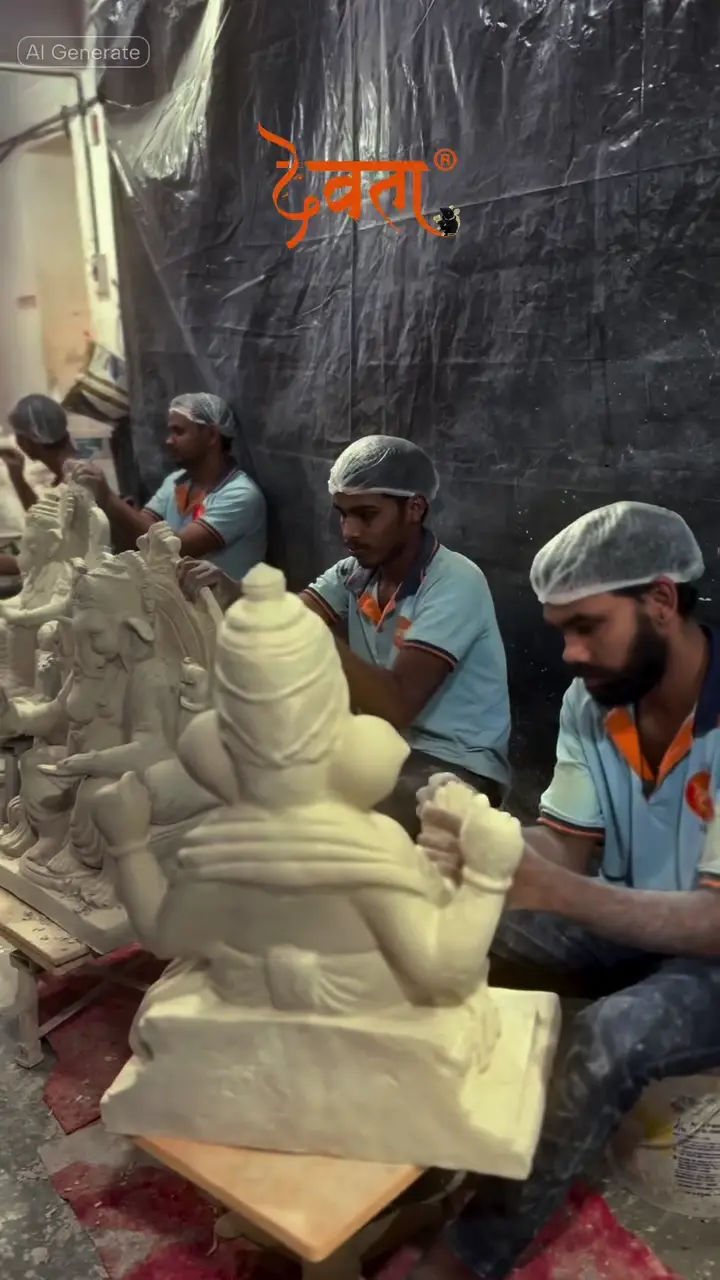
Master clay sculptors mold Bappa's sacred shapes. No synthetic plaster molds or polymer binders are introduced during this sacred phase.
Rather than using industrial ovens which cause stress cracks, the molded idols are aged slowly under shaded verandas for 14-21 days.
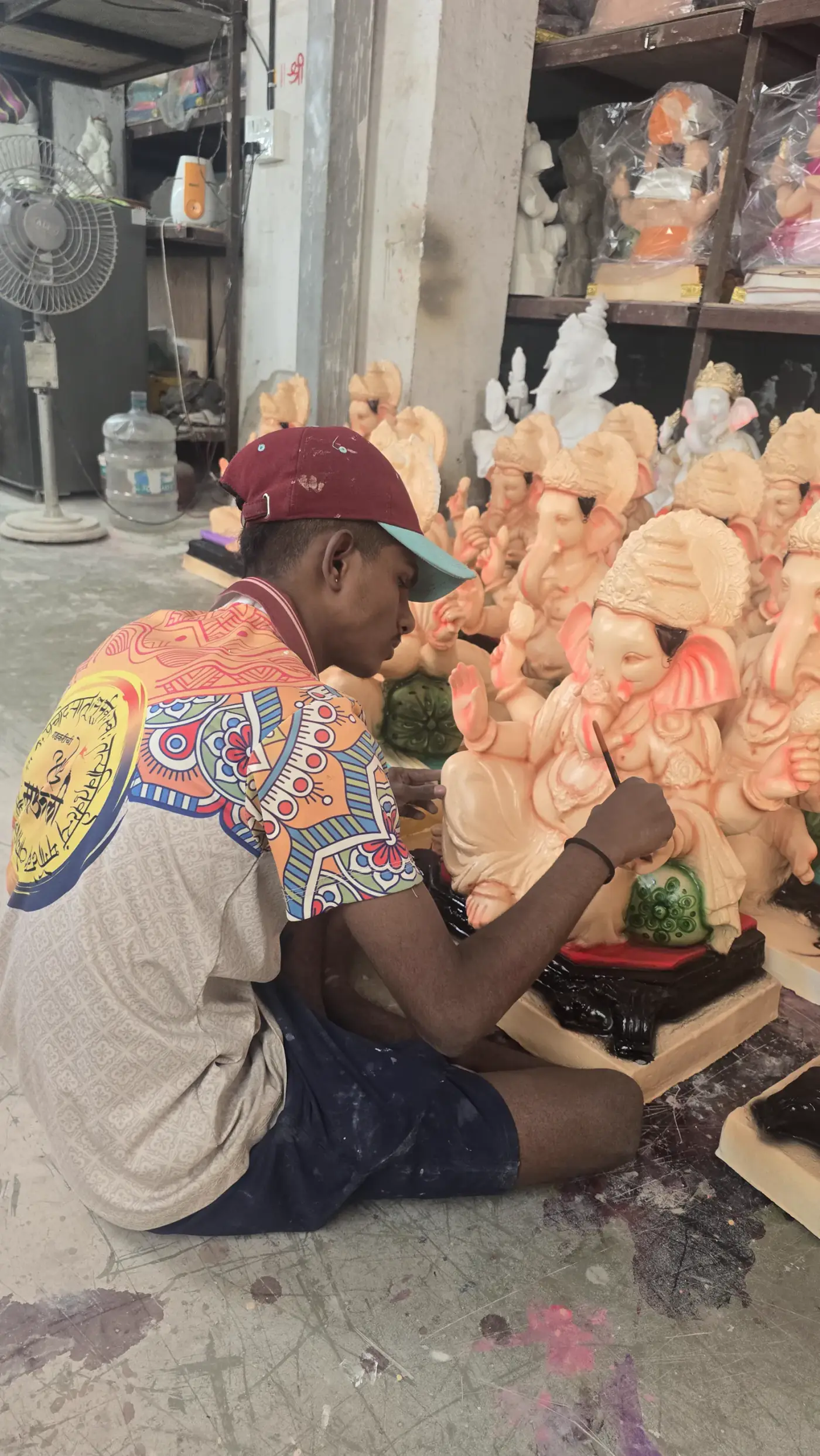
Rural women artisans handpaint detailed garments using food-grade natural pigments derived from turmeric, red soil, and vegetable dyes.
Real photos from our Mumbai (Mahul, Sion) and Alibaug production floors — no stock photography, no AI renders.
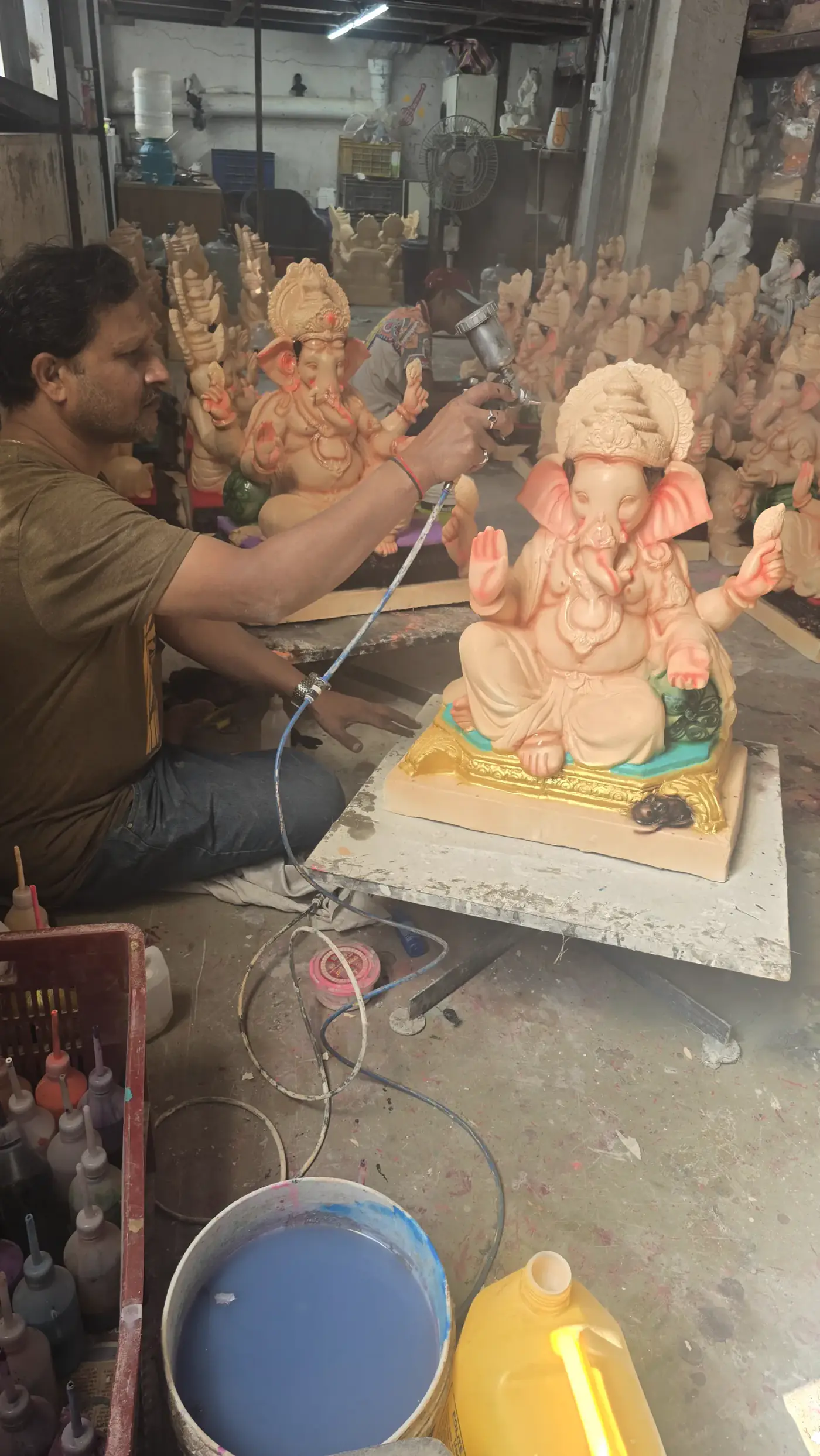
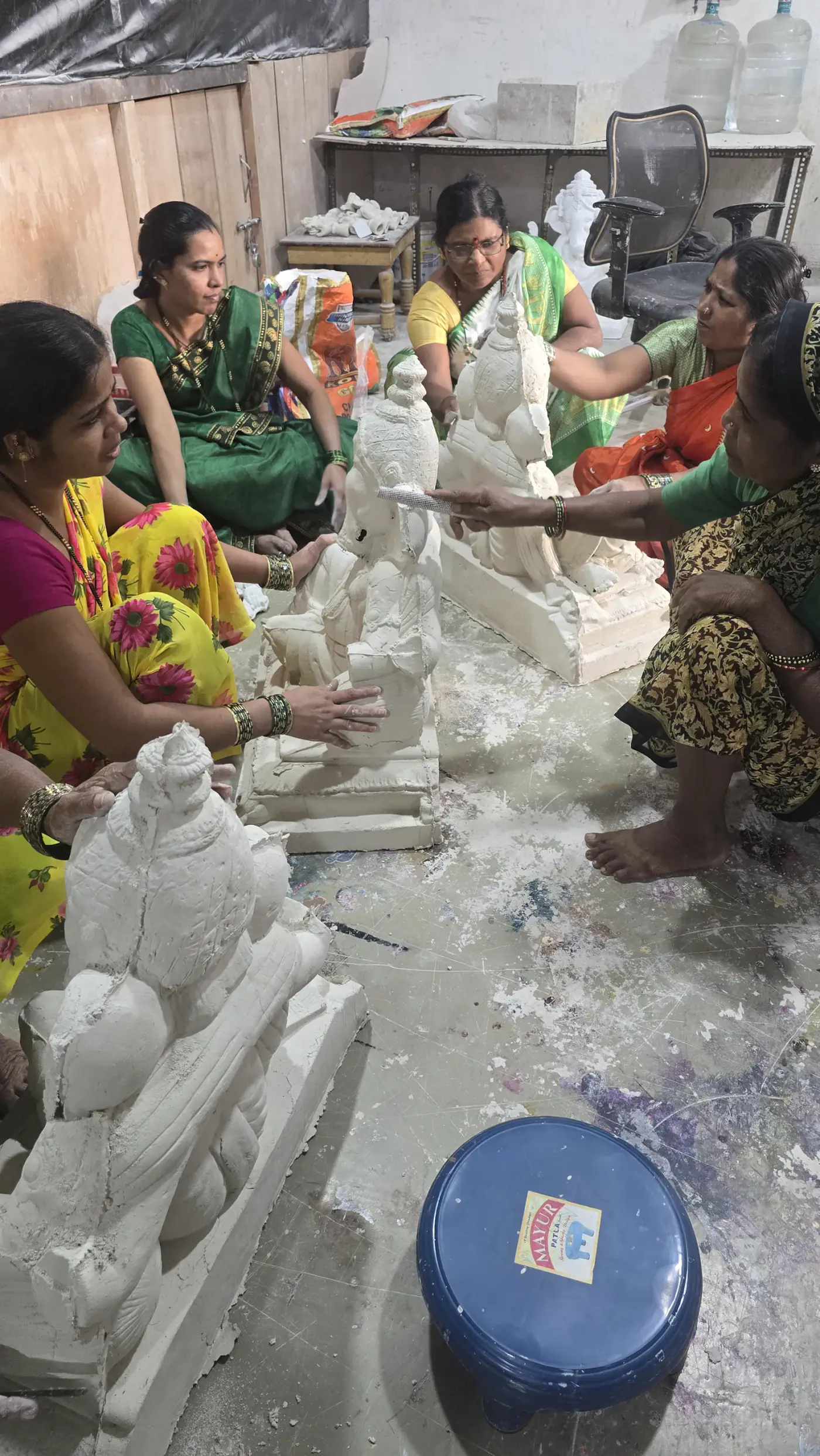
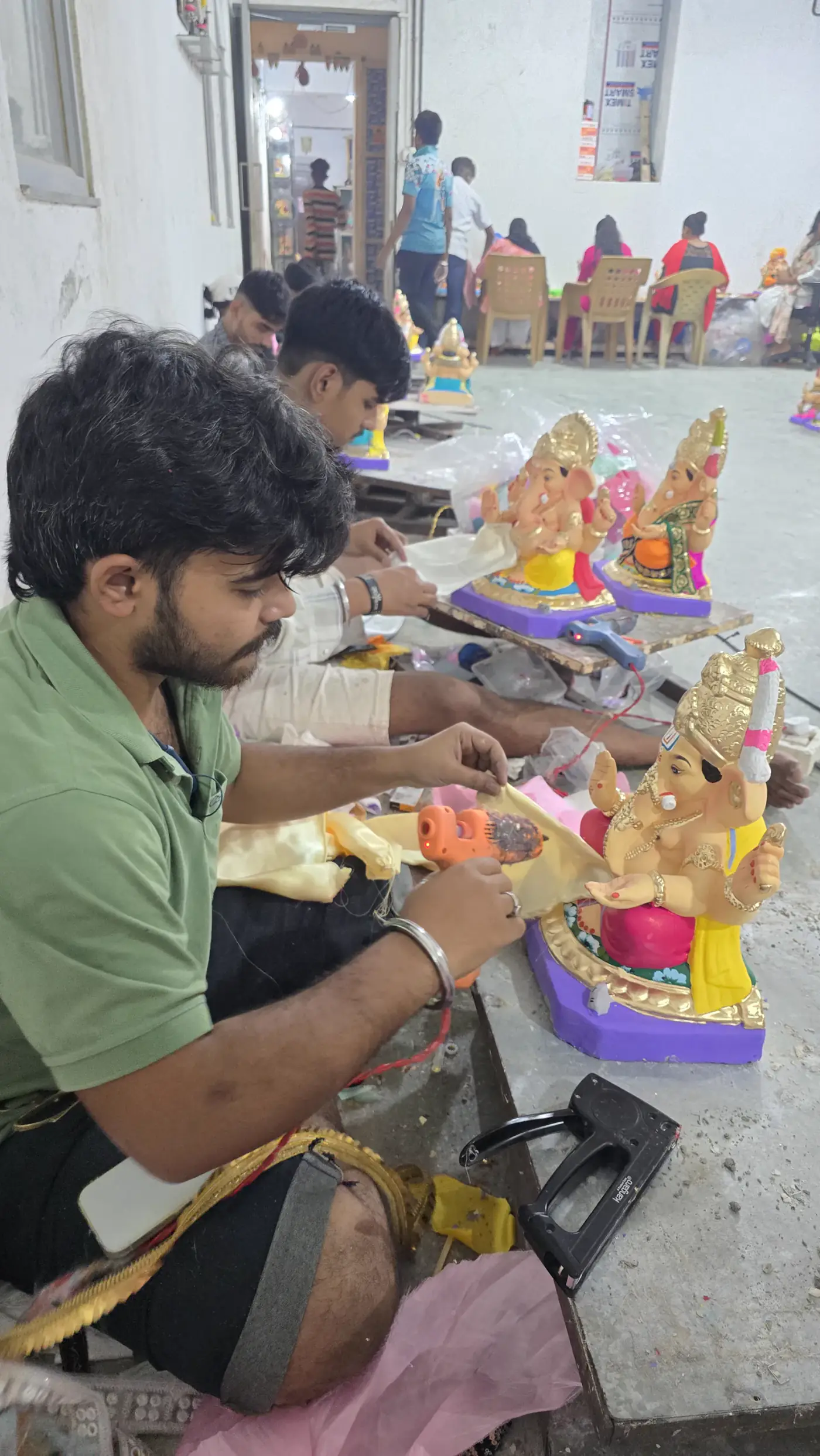
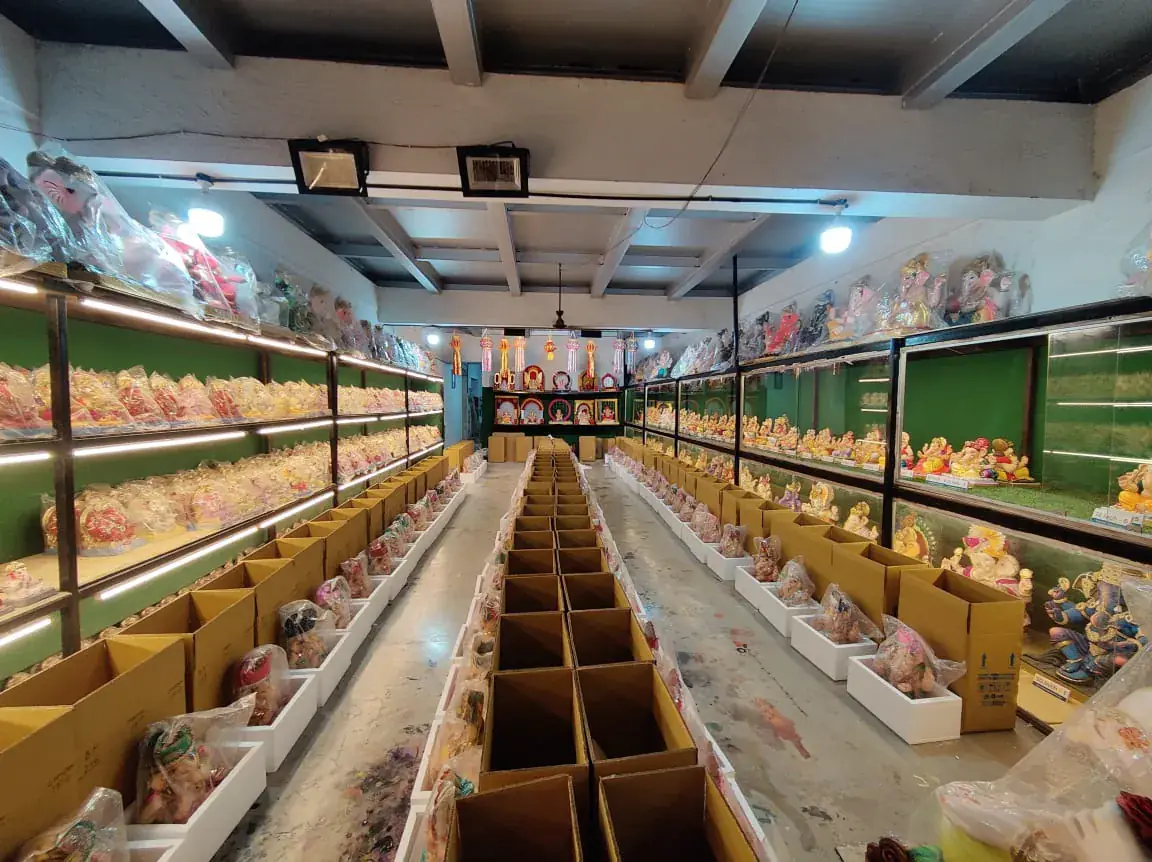
Short reels recorded from our active workshop floor across Mumbai & Alibaug. Tap any video to play.
Almost all commercial Ganpati idols sold in markets are coated with heavy oil paints containing high quantities of toxic lead, cadmium, and arsenic. These chemical paints reflect water, preventing the clay from dissolving, and remain in ocean silt for years, poisoning Mumbai's marine life.
At Devta, we strictly reject chemical paints. Every single line, border, and fold is handpainted using natural water-soluble dyes compiled with tapioca starch. This absolute green guarantee makes our murtis safe for homes with infants and pets, and entirely harmless to fish during household visarjan.
Browse Fully Painted CollectionIndustrial production has heavily impacted traditional clay craft communities in Maharashtra. By scaling our operations to 15,000 square feet, Devta Kala Kendra Pvt. Ltd. provides secure, year-round employment to over 50 local rural sculptors and women artisans across Sion, Mahul, and Alibaug.
Every purchase you make directly supports these traditional artisan families, helping preserve a centuries-old cultural craft in Western India under official DPIIT Startup India certification.
Read Our Full Startup StoryWe do not use high-speed automated factory printing. Every Bappa face is individually sculpted and finished by a pair of human hands.
